Order tea in a Japanese restaurant after a heavy meal and there is a good chance what arrives is hojicha: amber-brown in the cup, smelling of roasted chestnuts, with none of the grassy bite you might expect from green tea.
It is one of the easiest Japanese teas to like and one of the least understood outside Japan. Here is the whole picture.
What Is Hojicha?
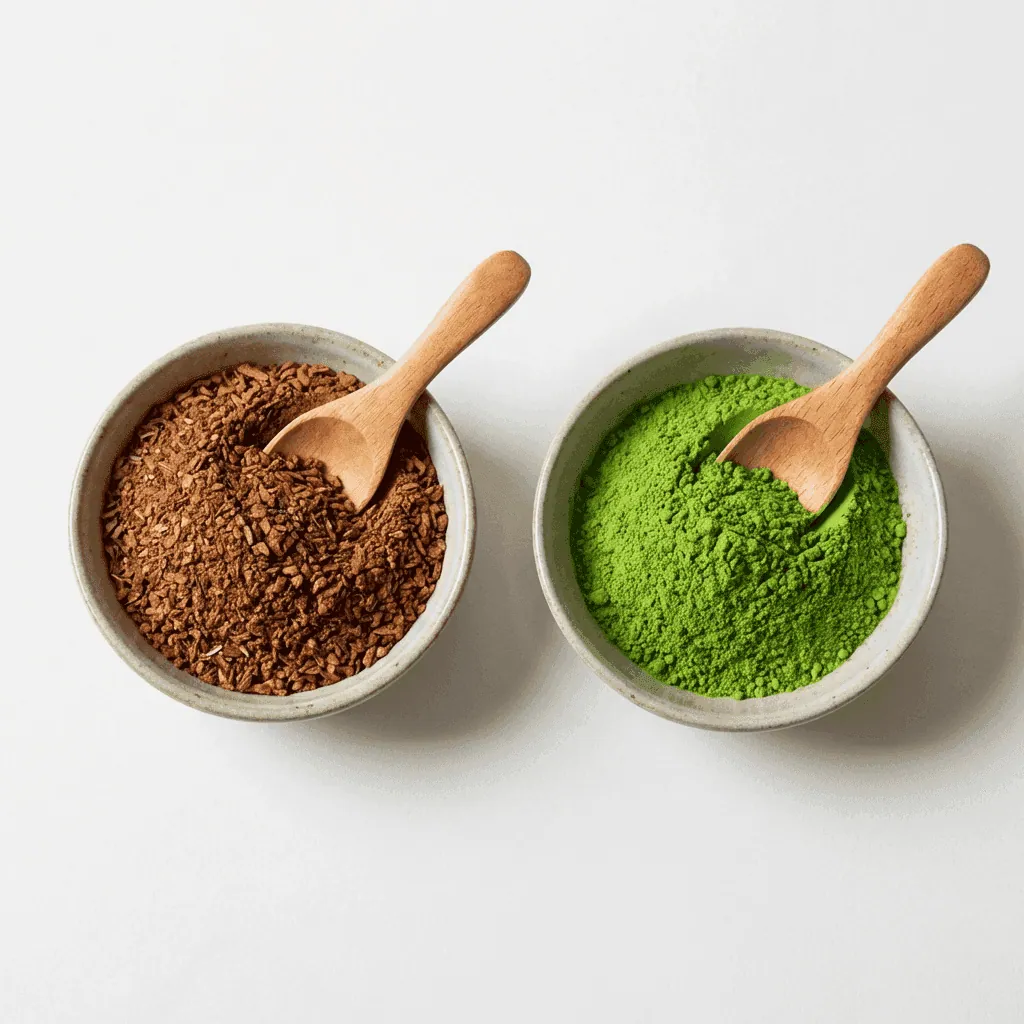
Hojicha (ほうじ茶) is Japanese green tea that has been roasted at around 200°C. That single step changes the colour from green to reddish-brown, replaces the fresh grassy aroma with roasted caramel notes, strips out nearly all the bitterness, and burns off most of the caffeine.
It is made from the humble end of the tea harvest — mature bancha leaves, late-season sencha, or kukicha twigs and stems — which is exactly why it costs so little compared with matcha.
The name is literal: 焙じる (hōjiru) means “to roast”, 茶 (cha) means “tea”.
How to Say It
HOH-jee-chah.
The Japanese spelling ほうじ茶 romanises properly as hōjicha, where the macron over the o marks a long vowel — hold it slightly. In practice you will see it written four ways in English, all meaning the same thing:
- hojicha — the most common English spelling
- houjicha — a literal transliteration of the long vowel
- hōjicha — the technically correct romanisation
- hoji-cha — occasionally hyphenated
If someone writes “hochija” or “hojica”, they mean this too. It is a commonly misspelled word.
Where It Came From
Hojicha is a modern invention by tea standards. It appeared in Kyoto in the 1920s, when a tea merchant — facing a pile of unsold leaves, stems and twigs left over after the good stuff was sold — tried roasting them over charcoal rather than throwing them out.
The result was so aromatic that it stopped being a way to use up leftovers and became a category. Within a few decades hojicha was standard in Japanese homes, hospitals and restaurants, precisely because its low caffeine made it suitable for anyone at any hour.
How Hojicha Is Made
- Harvest. Mature leaves, stems and twigs are picked, usually from later harvests. No shading — unlike matcha, which is shaded for 3–4 weeks.
- Steam and dry. Standard Japanese green tea processing, which halts oxidation and keeps the tea “green” in the technical sense.
- Roast at ~200°C. The defining step. Minutes in a rotating drum or over charcoal.
- Cool and sort. Some hojicha is then stone-ground into hojicha powder for lattes and desserts.
Everything distinctive about the tea happens in step three. Chlorophyll breaks down, so green turns amber. Catechins degrade, so the astringency disappears. Caffeine sublimates at 178°C — below the roasting temperature — so most of it leaves. And pyrazines form, which is where the roasted-nut aroma comes from.
What It Tastes Like
Warm, toasty and gently sweet. The usual descriptors are roasted chestnut, caramel, toasted grain and a hint of wood smoke.
What is absent matters as much as what is present. There is no bitterness, no astringency, and none of the vegetal, marine, seaweed-adjacent character that defines sencha and matcha. That is why hojicha is so often the tea that converts sceptics: there is nothing to get past.
Roast level moves the flavour considerably. A light roast is sweeter and more floral; a dark roast is smokier and closer to coffee. Neither is better — they are different drinks.
Caffeine: Why It’s the Evening Tea
A cup of hojicha holds roughly 7–15 mg of caffeine. For comparison, sencha carries 20–30 mg, matcha 35–70 mg, and a mug of drip coffee about 95 mg.
That puts hojicha in the same territory as a bar of dark chocolate — enough that it is not decaf, little enough that it will not touch your sleep. Japanese families serve it to children and to grandparents, and restaurants pour it after dinner, for exactly this reason.
The detailed numbers, including why whisked hojicha powder runs higher than steeped leaf, are in our hojicha caffeine guide.
Hojicha vs Matcha, Sencha and Genmaicha
| Hojicha | Matcha | Sencha | Genmaicha | |
|---|---|---|---|---|
| Processing | Roasted at 200°C | Shaded, ground | Steamed only | Green tea + roasted rice |
| Colour | Amber-brown | Emerald green | Yellow-green | Pale green |
| Flavour | Toasty, caramel | Umami, creamy | Grassy, brisk | Nutty, savoury |
| Caffeine | 7–15 mg | 35–70 mg | 20–30 mg | 10–20 mg |
| Bitterness | None | Some | Moderate | Mild |
| Price | Low | High | Moderate | Low |
The comparison people ask about most is the first one — the full breakdown is in hojicha vs matcha.
How to Brew Hojicha
Hojicha is the most forgiving Japanese tea there is. Where matcha demands 70–80°C water or it turns bitter, hojicha has already been through 200°C — there is nothing left in it that hot water can spoil.
Loose leaf: 1 tablespoon per 300 ml, water at 90–95°C, steep 30–60 seconds. It will take a second and third infusion happily.
Powder: sift 2 g, add 60 ml of 85–90°C water, whisk in an M-shape until frothy. Add milk for a hojicha latte.
Cold brew: 1 tablespoon in 500 ml of cold water, refrigerate 4 hours. Remarkably sweet, and about the lowest-caffeine tea you can make.
Who Hojicha Is For
Hojicha suits you if you want a warm drink in the evening, if green tea’s bitterness has put you off before, if you are sensitive to caffeine, or if you want something to serve to a table that includes children and people who do not drink coffee.
It is not the tea to reach for when you need to concentrate — that is matcha’s job, and matcha’s L-theanine is genuinely better at it. The two are complements rather than rivals, which is why most people who try both end up keeping both.
Hojicha or matcha? Answer 3 questions
Pick what fits you and we'll tell you which cup to pour — and why.
0 of 3 answered